
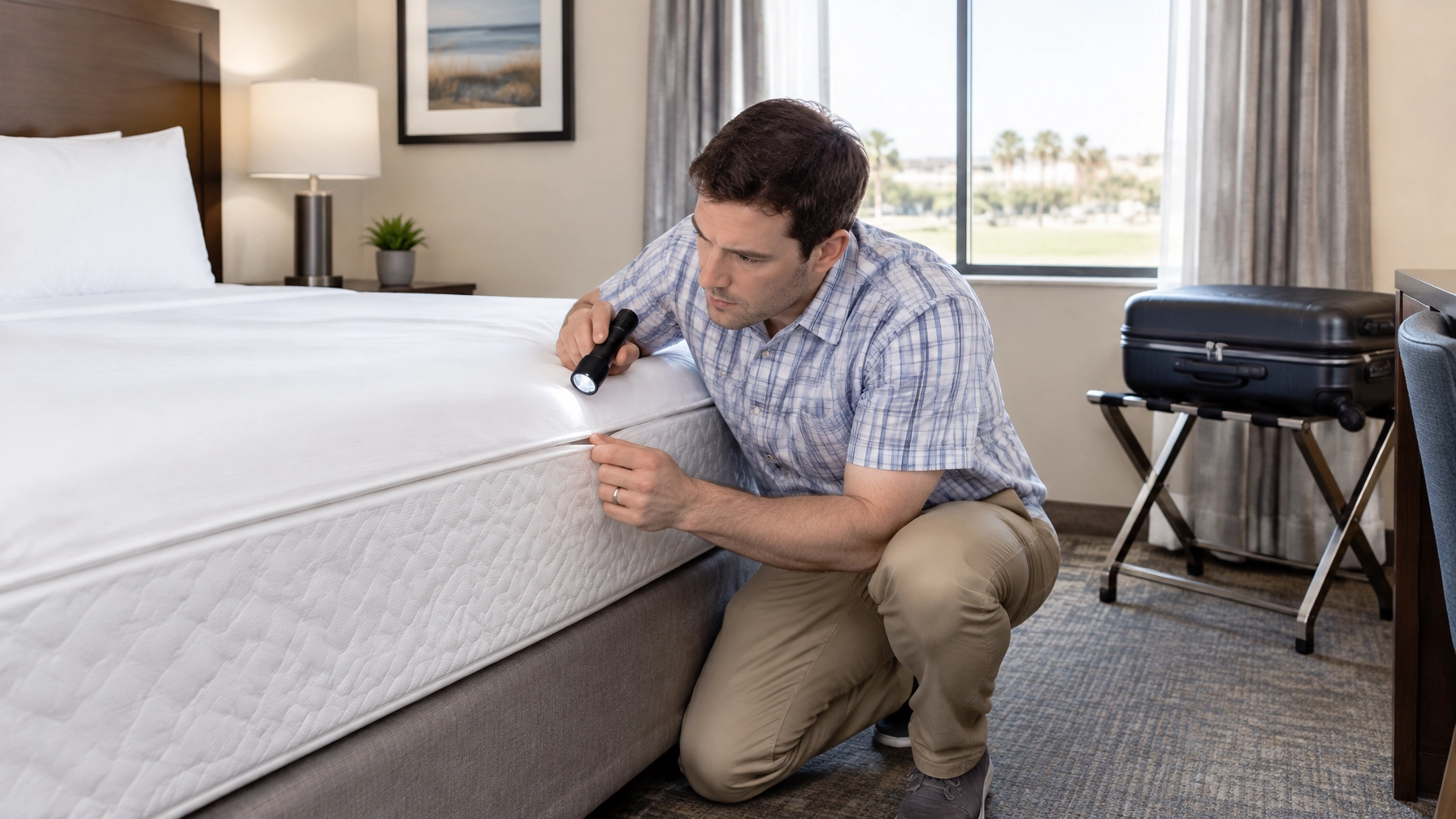
Holiday travel can bring family visits, overnight stays, and busy packing lists. It can also create opportunities for bed bugs to hitchhike home in luggage and belongings. A few simple precautions can lower the risk, and knowing what to do if you spot signs can help keep a small concern from spreading.
How bed bugs hitchhike home
Bed bugs don’t fly or jump. They hide in small spaces and can travel in luggage, clothing, bags, and other belongings. At hotels, they may be found near beds and upholstered furniture. They can also turn up in other places where people sleep or spend time.
Finding bed bugs isn’t a reflection of cleanliness. They can be introduced into a tidy home, and clutter does not cause them. But reducing clutter can make inspection and treatment easier if a professional finds an infestation.
What signs should you look for?
Check for physical evidence, especially around sleeping areas. Common signs include:
- Live bugs: Small, flat, oval-shaped insects. Adults are roughly apple-seed sized.
- Shed skins: Pale, papery exoskeletons left behind as bed bugs grow.
- Dark spotting: Small dark marks that may look like ink spots on fabric. These can be droppings.
- Eggs or eggshells: Tiny, pale eggs or their remains.
- Rusty or reddish stains: Marks on sheets or mattresses can result from crushed bugs.
Start with mattress seams, tags, and piping; the box spring; bed-frame joints; and the headboard. Check the luggage rack and nearby upholstered furniture, too. Bed bugs can hide in narrow cracks and crevices, so don’t assume a quick glance rules them out.
Bites alone don’t confirm bed bugs. Some people have no reaction, and bite marks can resemble other skin irritation. If you’re unsure what you’ve found, take a clear photo or preserve the insect in a sealed container for identification, if you can do so safely.

Before you unpack: hotel precautions
A few minutes of checking at the start of a stay can help you make an informed decision before your belongings are spread around the room.
- Keep your suitcase closed. Place it on a hard surface, such as the bathroom floor, while you inspect. Avoid setting it on the bed or upholstered furniture.
- Check the sleeping area. Use a flashlight if you have one. Look at mattress seams and the headboard, and check the luggage rack.
- Keep luggage off the floor. If your inspection doesn’t raise concerns, use the luggage rack and keep the suitcase closed when you’re not using it.
- Bag worn clothes. Store laundry in a sealed bag rather than loose in your suitcase.
If you spot possible bed bug signs, don’t unpack. Photograph what you found, notify hotel management, and ask about next steps or a different room. If you move, keep your belongings contained and away from the bed. The U.S. Environmental Protection Agency has more advice in its bed bug travel tips.
After you return home
Before bringing luggage into a bedroom, inspect its seams, pockets, and compartments. If practical, unpack on a hard surface away from sleeping areas. Put travel clothing directly into the washer or dryer, and follow garment-care instructions. The EPA notes that high heat in a dryer can kill bed bugs; washing alone generally may not.
Keep suitcases closed and store them away from bedrooms. Don’t spray luggage, clothes, or skin with household pesticides. If you find a live bug or other signs, avoid carrying items through the home while you decide what to do.

What to do if you find signs at home
Stay calm and limit movement. Taking quick action doesn’t mean moving everything into another room. In fact, carrying bedding, clothes, or furniture from room to room may spread bed bugs.
Instead:
- Leave affected items where they are. Avoid relocating furniture or laundry to other rooms.
- Don’t rely on foggers or random sprays. They may not reach bed bugs hiding in cracks and crevices, and using products incorrectly can create risks. Texas DSHS warns that over-the-counter foggers and pesticides will not eliminate bed bugs.
- Contact a qualified pest professional. Share what you saw, where you found it, and whether anyone has recently traveled. Ask what to leave in place and how to prepare before treatment.
- Follow preparation instructions. Your provider can explain what to do with laundry and belongings based on the inspection and recommended treatment.
The EPA explains that early identification can make an infestation easier to address. For more detail on signs and hiding places, see How to Find Bed Bugs. For Texas-specific guidance, visit the Texas Department of State Health Services bed bug page.
How professional bed bug removal works
A pest professional typically begins by asking about the signs you found and inspecting relevant areas. Bed bugs can be difficult to identify when there are few of them, and other insects may be mistaken for bed bugs. A careful inspection helps determine whether treatment is appropriate and where attention is needed.
If bed bugs are confirmed, the professional should explain the treatment plan and any preparation needed. Treatment is targeted to the inspection findings and may require follow-up. The process can vary depending on the home and extent of the problem, so avoid anyone promising a guaranteed one-visit fix before assessing the situation. Ask what the treatment involves, how to prepare, and whether a follow-up inspection or visit is recommended.

Bed bug removal in Pearsall, Dilley, Cotulla, and Devine
Travel precautions are useful whether you’re heading out of town or welcoming guests. If you’re searching for bed bug removal in South Texas, Salinas and Sons Pest Control offers specialized bed bug treatments for homes and businesses in the area.
Homeowners looking for pest control Pearsall TX, pest control Dilley TX, pest control Cotulla TX, or pest control Devine TX can contact the local, family-owned company to discuss their concern. Salinas and Sons is focused on affordable service and does not require long-term contracts. Customers can cancel anytime, skip months, and pay as they go. Ask the team about service options and request a quote for your situation.
Start by describing what you found and where you found it. Contact Salinas and Sons Pest Control or call 830-210-0074. Learn more about the company’s services in Pearsall, Dilley, Cotulla, Devine, and surrounding South Texas areas.
A little care while traveling can help prevent hitchhiking pests. If you do notice signs at home, keep belongings in place, skip improvised sprays, and ask a professional to inspect.







Leave A Comment